
How to Make a Simple Memory Journal Page with Printable Cards
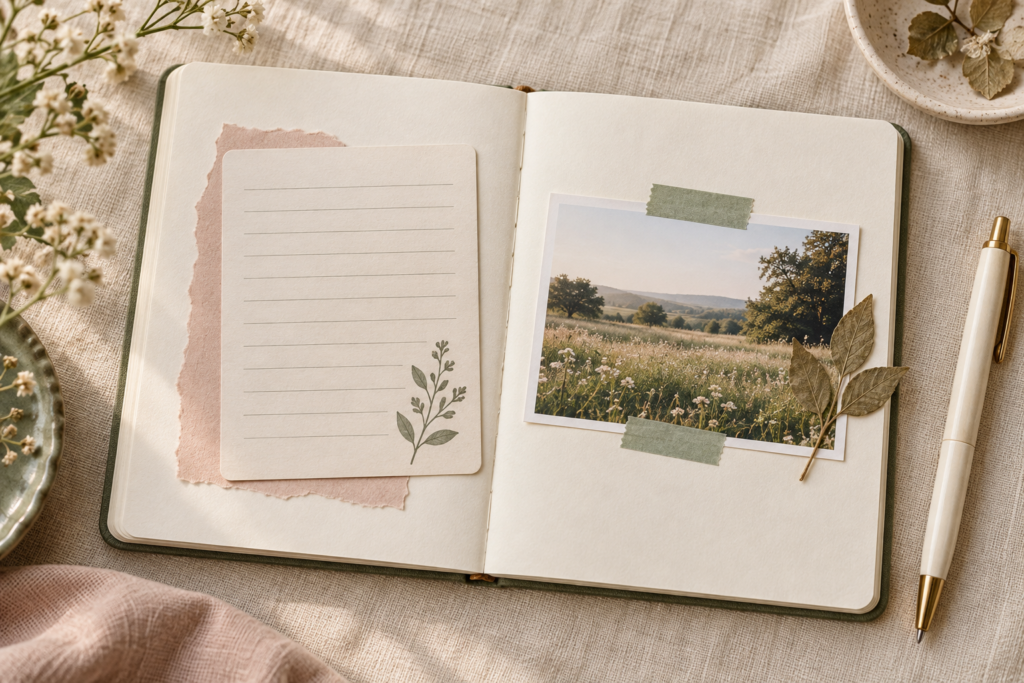
Make a simple memory journal page with a printable card and one small keepsake. You do not need a full page of writing to keep a memory. A date, a few sentences and one small piece of paper can be enough. This beginner layout uses a 3 x 4 inch journal card as a place to start, with room beside it for a photograph, a ticket copy or a little drawing.
Table of Contents
Gather supplies for your memory journal page
- A journal or notebook with enough room for a 3 x 4 inch card.
- One card from our free Botanical Notes printable pack.
- A pen and scissors.
- A glue stick, photo corners or removable washi tape.
- Optional: a copy of a photograph, a paper scrap or a small keepsake.
If your notebook is smaller, use one of the 2 x 3.5 inch tags instead. The point is to give your words a place on the page, not to squeeze in every piece of the printable set.
1. Choose one ordinary moment
Pick something specific: a walk, a shared meal, a page you enjoyed reading or a small conversation. Avoid trying to record an entire week at once. Ask yourself what detail would help you remember this moment a month from now: the weather, a color, a phrase someone said or what you noticed first.
2. Write on the card before attaching it
Add the date and two or three sentences while the card is flat. If you are unsure what to write, try: “Today I noticed…”, “I want to remember…” or “One small thing that made this day different was…”. You can use the lines for a list instead of a paragraph. Leave the back blank or use it for an extra note.
3. Arrange the page without glue
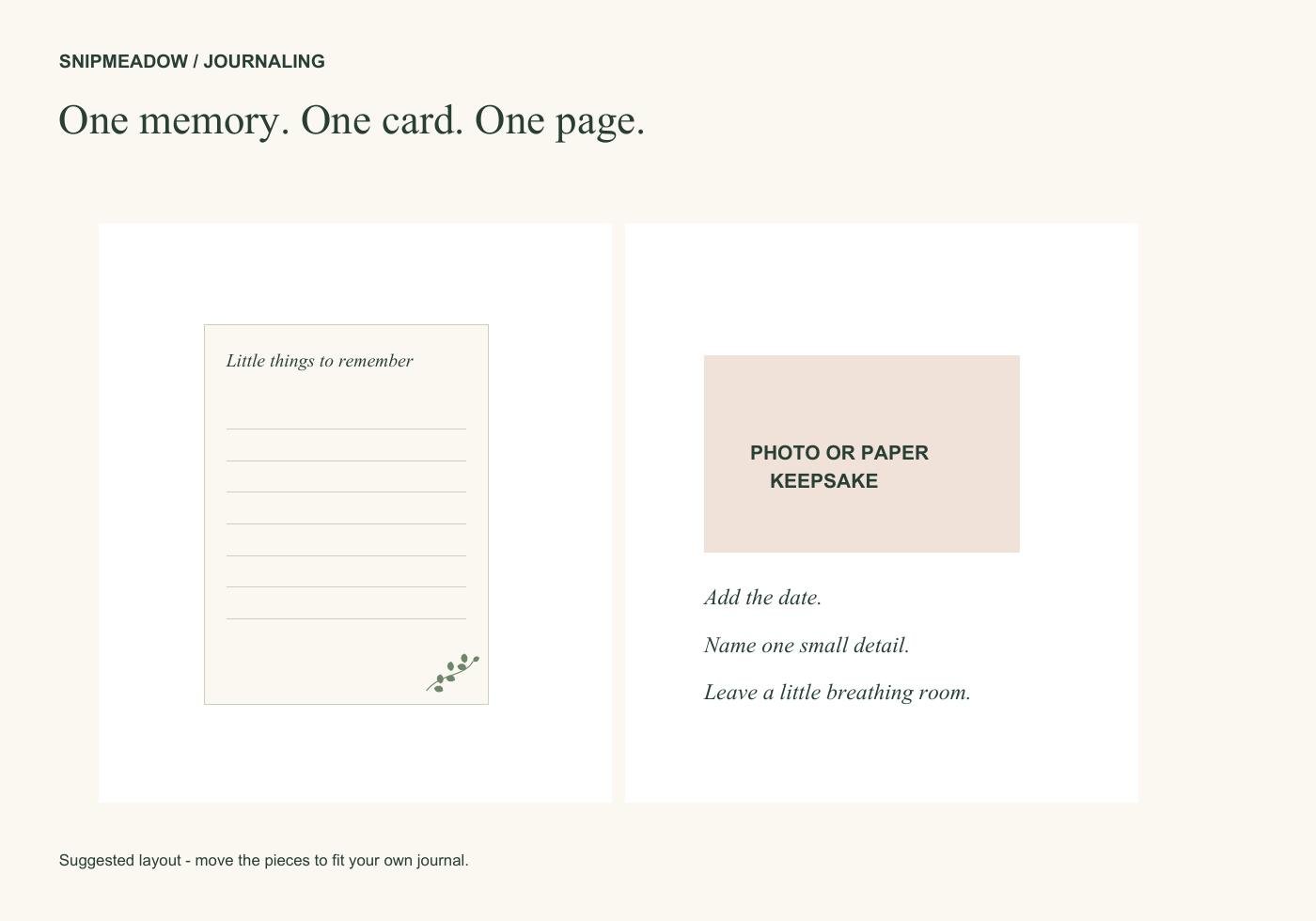
Put the card on one side of your memory journal page or spread and your keepsake on the other. Leave a little space around both pieces. Check that neither crosses the binding or covers writing you want to keep visible. Move the pieces until your eye has an easy place to start. You can take a quick phone photo of the arrangement before lifting them to add adhesive.
4. Choose how permanent you want it to be
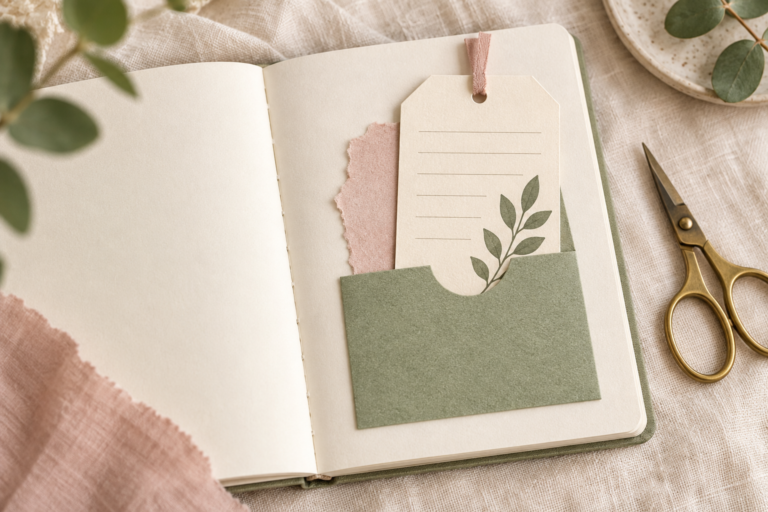
Glue the card down if you only need the front. Use photo corners if you want to remove it later, or place a short strip of washi tape along one edge so it opens like a flap. Tape can lose its grip over time, so keep valuable originals separately and use copies for this project. If you prefer a removable tag, follow our simple journal pocket guide.
5. Repeat one color, then stop
Choose a small paper scrap or a line of pen that repeats the sage, cream or blush in the card. One repeated color can help the page feel connected without adding lots of layers. Open and close the journal to check that nothing catches. If you used glue, leave the page open until it has dried.
Three ways to change the layout
- No photo: draw the outline of a cup, leaf or other object from the moment.
- Very little time: use only the card, the date and a single sentence.
- More to say: add a second card, or keep the first one removable so you can write on the back.
A memory journal page example you can adapt
Here is a fictional example for a quiet afternoon walk. Use it as a structure, then replace every detail with your own experience:
September 28 — The walk home
The pavement was still wet, and I stopped to look at the leaves beside the gate. I want to remember the smell of rain and the few minutes without rushing.
Put those lines on the card. Beside it, add a small leaf drawing or a copy of a photo from the walk, with one short label underneath. A strip of sage paper along the bottom can echo the botanical card. This gives the memory journal page a date, one specific detail and a visual reminder without needing a long entry.
A finished page does not have to be full
Leave blank space if you like it. You can return to the page later, but you do not have to. Keeping one clear memory is already a complete small project. Save the remaining cards for another day instead of trying to use the whole pack at once.
Memory journal page questions
What if I cannot remember the exact date?
Write the month, season or approximate date, and make the uncertainty clear. “A rainy afternoon in September” can be more honest than guessing a day. You can add the date you are writing the entry separately. The purpose is to preserve what you do remember, including small details, without filling gaps with invented facts.
How can I keep a note private?
Write it on the back of a removable card or tuck it into a pocket, keeping only a short title visible on the memory journal page. A flap or pocket hides text from a quick glance but does not make a shared journal confidential. Leave out sensitive information if other people may handle the book or if you plan to photograph the page for Pinterest.
What should I check before attaching everything?
Read the card once for names and dates, check that the writing is dry, and close the notebook gently with the pieces still loose. If something catches at the edge, move it inward. Make sure any removable card has enough room to slide out. Take away one decorative layer if the spread already feels thick; you can always add it later.
Ready to begin? Get the free journal cards and printing instructions.

Looking for another little project? Explore Journaling, Printables or Paper Crafts.